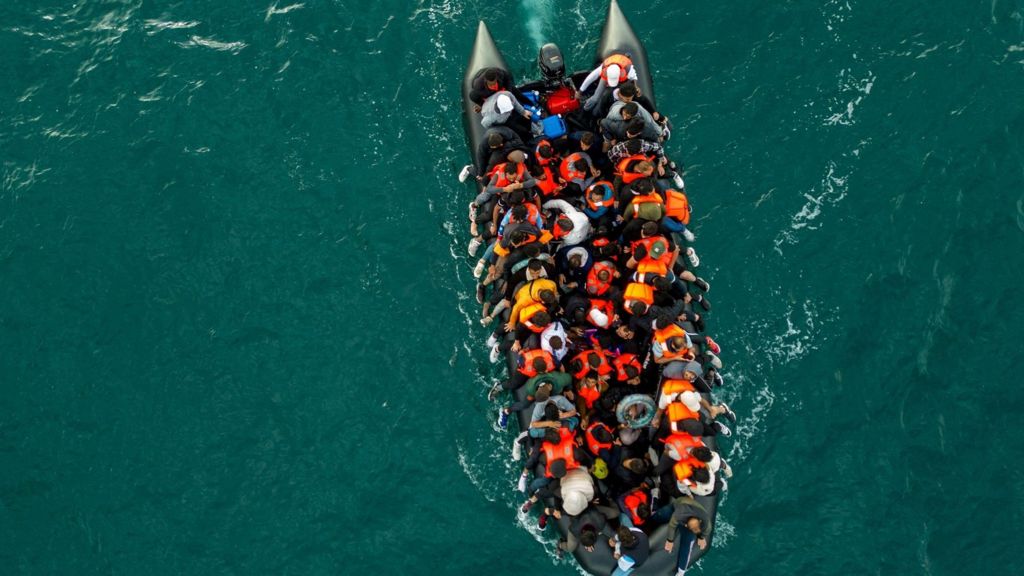
Five European Union (EU) countries - Germany, Denmark, Austria, Greece, and the Netherlands - have announced plans to establish a migrant "return hub" in Rwanda next year. The center is intended to facilitate the removal of failed asylum seekers residing illegally within these nations. The scheme will be operational by 2027, with the Dutch and Danish governments confirming the readiness for transfers. Deportees will have the option to either integrate into Rwandan society or return to their home countries. The plan targets migrants who have exhausted their legal options to remain in these five nations. Unlike a canceled British deal, this scheme does not envision processing claims in Rwanda. Legal challenges stalled the UK's initiative, eventually leading to its abandonment by the incoming Labour government in 2024. The UK has yet to rule out participation in the project, expressing interest in monitoring its progress. Spanish Prime Minister Pedro Sánchez criticized the plan, calling it "devoid of future or humanity." Rwanda expressed commitment to working with European partners to provide a safe and dignified solution for migrants while addressing global economic imbalances. The initiative aligns with recent EU reforms permitting the creation of such centers outside the bloc. Initially, the hub is expected to operate as a pilot project hosting approximately 100 people, with each participating nation sending around 20 migrants. The United Nations' International Organisation for Migration (IOM) may potentially play an ancillary role in the scheme.
SUMMARY (CONTINUED):
The proposed center aims to alleviate European asylum systems and curb human trafficking across the Mediterranean. In its first phase, only single men will be returned from the five nations. Upon arrival in Rwanda, migrants will have access to rights such as residence, education, healthcare, employment opportunities, and legal representation. Rwandan Interior Minister Vincent Biruta emphasized the country's commitment to ensuring a safe, legal, and dignified solution for migrants while working towards economic equality. Critics argue that the choice of Rwanda raises concerns due to its record of human rights abuses, including repression of dissent, arbitrary detention, ill-treatment in detention, and support for armed rebels in neighboring countries. Human Rights Watch's senior Africa researcher Clementine de Montjoye described the plan as a potential source of suffering and harm to deportees, financing a government responsible for serious human rights violations both domestically and abroad. The EU Agency for Fundamental Rights has also expressed concerns about fundamental rights violations in any third country hosting a return hub. However, unaccompanied children will not be sent to the center, as confirmed by the Dutch government.
SUMMARY (CONTINUED):
In 2026, nearly 110,000 irregular border crossings into the EU were recorded during the first ten months, representing a decrease of 29% compared to the previous year. With elections approaching in several EU nations, administrations face pressure to demonstrate control over migration. Concerns about security, struggling economies, and disillusionment with governing parties have significantly shaped attitudes towards immigration. The independent EU Agency for Fundamental Rights advises any third country hosting a return hub to respect fundamental rights, ensuring that individuals are not sent to countries where they face serious risks of persecution.