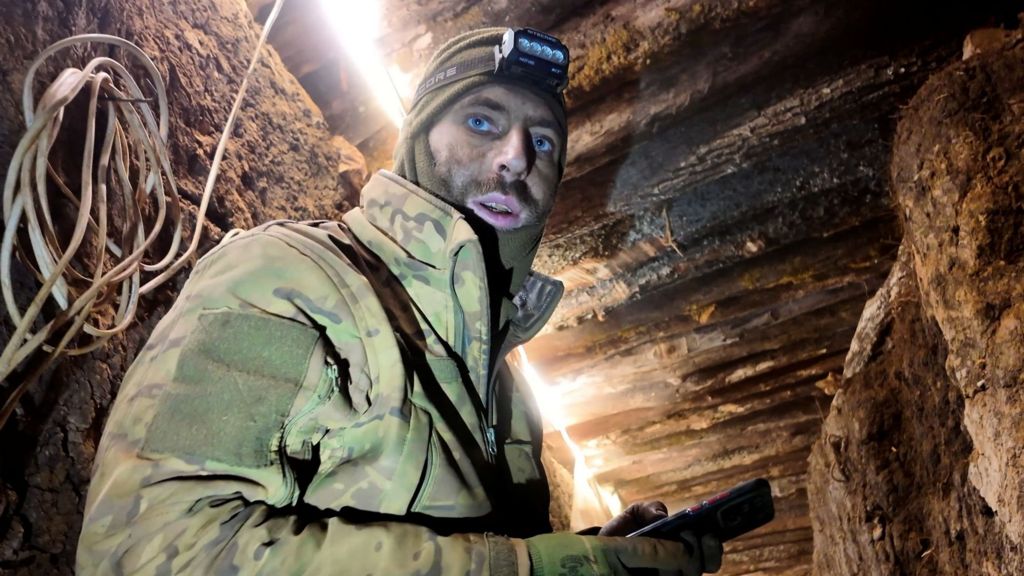
In a stark shift of the ongoing conflict, Ukrainian forces are waging an underground war against their Russian counterparts in a repurposed Soviet gas pipeline in Kharkiv. For seven months, these troops have been crawling through the narrow tunnels, evading drones that dominate the skies above. This subterranean battleground is a stark contrast to open-field combat, offering relative safety from aerial surveillance but presenting its own unique challenges.
The journey to this clandestine battlefield is fraught with danger, involving high-speed vehicle rides and long marches through muddy terrain. Upon reaching the tunnel entrance, one is greeted by the lingering odor of gas and stale air. Both sides use openings in the pipeline for surface engagements, with breaches made in the ground and thick steel welded open for passage. The Russians were the first to exploit this subterranean route, seizing Kupyansk city in September 2025. However, Ukrainian forces have gradually turned the tide, employing a specially designed electric cart for transportation within the pipeline, which they've nicknamed the "Kupyansk metro."
The cart transports troops and supplies through the pipeline, albeit with occasional breakdowns. Destinations include dug-outs where ammunition and equipment are stored, allowing for strategic movement. One such strategist is a soldier known as Musician, who has been living underground for three months, barely venturing above ground for cleaning or bathroom breaks. The thuds of artillery rounds overhead serve as a constant reminder of the ongoing conflict, but Musician assures that it's safe beneath the surface.
The cart continues its journey deeper into the earth, returning with more troops after engagements on the surface. Soldiers emerge covered in dirt, relief evident on their faces. Vovochka, who has been fighting on the ground for three weeks, shares that the pipeline offers comfort because drones don't fly there, and neither do artillery shells or glide bombs. However, fighting within the pipe is not unheard of, with Operation Veles, named after a Slavic god of the underworld, resulting in Ukraine's advance along the pipeline by 15km since April. This painstaking, backbreaking operation has come with the ever-present fear of encountering enemy forces.
Back above ground, soldiers from Ukraine's National Guard share their experiences. Their first task was to clear debris and Russian barricades within the pipe, some of which were booby-trapped or stacked with dead bodies. The other danger lay in ricochets from gunfire during advances. Despite these challenges, Ukrainian forces have reportedly killed over 100 Russian soldiers and taken 30 prisoners. Gecko, a Colombian volunteer involved in the operation, shares his struggles, taking 30 days to clear just 500 meters of pipe due to its heat and the fear it instilled.
The commander's background as a miner has helped prepare his troops for the physical and psychological challenges of underground combat. Biashym maintains regular contact with his men below ground from a surface building, tending to their medical needs and offering support. Colombian volunteers have also joined the operation, bolstering Ukraine's depleted ranks.