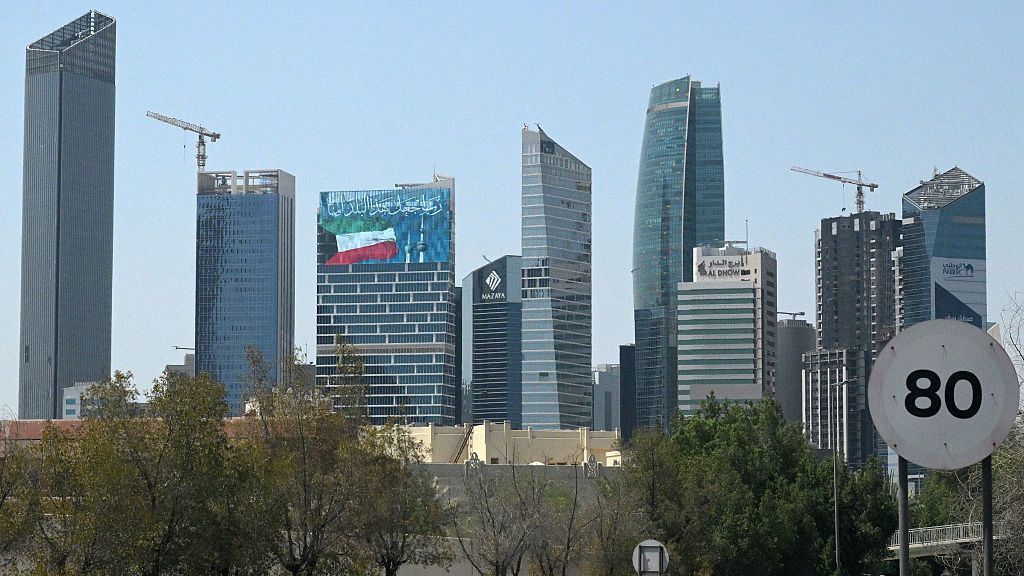
In a series of escalating incidents, both Kuwait and Bahrain have reported repelling Iranian air attacks overnight, marking the first such attack on Kuwait in over two months. The attacks come in response to a US air strike on the Iranian island of Qeshm earlier this week. According to US military officials, the US strike targeted an Iranian missile launch site on Qeshm Island in the Strait of Hormuz.
The Iranian army claimed that it had targeted the Ali Al Salem Airbase in Kuwait, which hosts US forces, but Kuwaiti authorities did not report any damage. Similarly, Bahrain reported intercepting and destroying several Iranian aerial attacks on its territory. The island kingdom has reported four attacks over the past six days, following a two-month lull.
The recent exchanges of fire have raised concerns about a potential major escalation in the nine-month-old war that began when the US and Israel attacked Iran in late February. Since then, Iran has retaliated for US and Israeli strikes by launching missiles and drones at Israel and Gulf Arab states hosting US military assets and personnel. The conflict has also led to attacks on commercial vessels in and around the Strait of Hormuz, through which a fifth of global oil and gas shipments usually pass.
The UK Maritime Trade Operations (UKMTO) centre reported that a tanker was struck by an unknown projectile about 13 nautical miles north of Khasab, in Oman's Musandam peninsula. Meanwhile, the Abu Dhabi National Oil Company (Adnoc) said a search-and-rescue operation was underway for a missing sailor following an attack on one of its vessels in the Strait of Hormuz.
Iran has alleged that it targeted US Patriot air defence systems and drone and missile launch platforms at Ali Al Salem Air Base in Kuwait, while the US military claimed it responded to Iranian aggression by targeting a missile launch site on Qeshm Island with precision munitions. The recent developments have raised fears of a further escalation in tensions, as both sides continue to exchange fire and negotiate indirectly through intermediaries like Qatar.