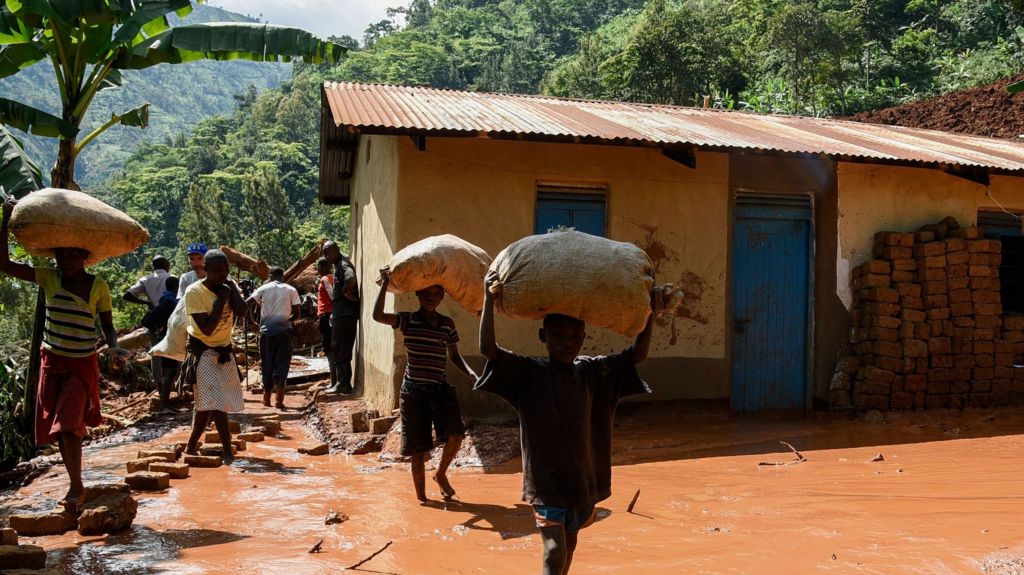
Survivors of a devastating landslide that struck Bududa, eastern Uganda in 2019, have taken their demand for relocation and compensation to the United Nations (UN). The group of 48 complainants accuse the government of violating the country's constitution by failing to implement effective disaster management measures in the mountainous region. They claim that the government's resettlement program disregards their safety, land rights, and livelihoods, as heavy rains raise the risk of further landslides. This case, believed to be the first seeking climate adaptation measures, could set a global precedent. The survivors lost more than 53 lives, including 33 children, in the disaster. Years later, they fear another tragedy every time it rains heavily. William Tsama, one of the claimants who lost four family members, says victims of such situations can take their governments to court to force them into action. The complainants also argue that changing rainfall patterns and soil fertility decline have affected farming, leaving many struggling to secure their livelihoods. Greenwatch, a Ugandan environmental organization, supports the survivors who are seeking compensation for lost family members and livelihoods, as well as emergency measures such as accessible early-warning systems in high-risk areas. The case aims to change how governments prepare and respond to climate-related disasters, ensuring that loss and damage are no longer an afterthought in disaster management. Climate-related disasters also pose threats across East Africa, with floods and landslides claiming lives in Kenya and Rwanda in recent years. The tragedy in Bududa is worsening due to climate change, affecting regions worldwide, as seen recently in Nepal where over 1,500 people lost their lives in a flash flood. Climate change disproportionately impacts poorer countries that have contributed minimally to global emissions and require greater financial support.
More than 40 survivors of a deadly 2019 landslide in Bududa, Uganda, have appealed to the United Nations (UN) Human Rights Committee, claiming that the government has violated its constitution by neglecting effective disaster management measures. The survivors lost over 53 lives, including 33 children, and fear another tragedy with every heavy rain. They accuse the government of ignoring their safety, land rights, and livelihoods in its relocation program. Greenwatch, a Ugandan environmental organization, supports the survivors who are seeking compensation for lost family members and livelihoods as well as emergency measures like early-warning systems. The case could set a global precedent, marking the first time climate adaptation measures have been sought at the UN. It also aims to force governments to adapt their policies to the changing climate, ensuring that loss and damage are no longer an afterthought in disaster management. Climate change has exacerbated the threat of landslides in East Africa, as seen in Kenya, Rwanda, and Nepal.
Forty-eight survivors of a 2019 landslide in Bududa, eastern Uganda, have taken their fight for relocation and compensation to the United Nations (UN). The complainants argue that the government has violated Uganda's constitution by failing to implement effective disaster management measures in the mountainous district prone to landslides. Their case could establish a global precedent as it seeks climate adaptation measures, with the UN Human Rights Committee considering it. The tragedy killed over 53 people, including 33 children, and survivors fear another disaster every time heavy rains fall. Greenwatch, a Ugandan environmental organization, supports the claimants who are seeking compensation for lost family members and livelihoods as well as emergency measures like accessible early-warning systems in high-risk areas. The case aims to change how governments prepare and respond to climate-related disasters. Climate change has worsened the threat of landslides across East Africa, with floods and landslides claiming lives in Kenya, Rwanda, and Nepal in recent years.