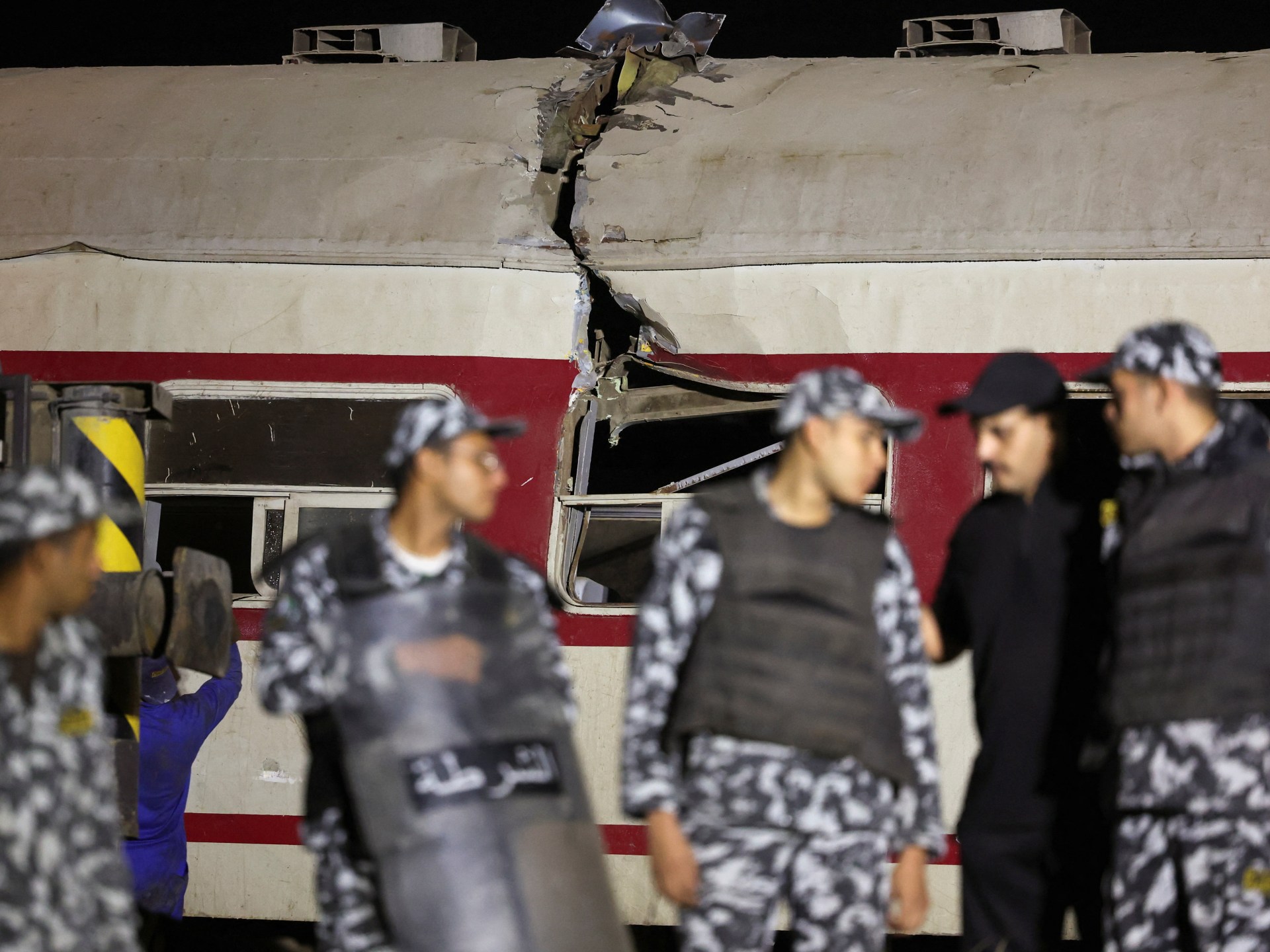
A tragic train collision in al-Ayyat, a district on the outskirts of Cairo, has resulted in at least seven fatalities and over 125 injuries, as per the Egyptian Ministry of Health and Population. The accident has ignited a flurry of political demands for accountability, questioning the effectiveness of millions of dollars invested in upgrading Egypt's railway network and its impact on passenger safety. The incident occurred when a train traveling between Giza and Fayoum collided with another train on the Cairo-to-Aswan route, causing the latter to derail onto a countryside road. President Abdel Fattah el-Sisi has ordered an urgent investigation into the collision, while the Transport Minister Kamel el-Wazir is set to appear before the Egyptian parliament's Transport and Communications Committee for an emergency session. Opposition voices have amplified calls for political accountability, ranging from criticizing the minister to demanding a government overhaul, citing previous train disasters in al-Ayyat and the absence of genuine accountability among officials. Parliamentarians are now demanding answers on railway funding and questioning the Transport Ministry's spending practices.
---
In the aftermath of Sunday's deadly train collision, political leaders and opposition voices alike have raised concerns about Egypt's railways and demanded accountability from those responsible for its maintenance and safety. Abdel Moneim Imam, a member of Parliament and head of the Justice Party, has highlighted several previous train disasters in al-Ayyat, including a 2002 fire that killed over 370 people and a 2009 collision that claimed 15 lives. Imam argues that repeated accidents in the area reflect the absence of genuine accountability for officials responsible for these incidents.
---
The train collision has not only resulted in tragic loss of life but also brought renewed attention to the state of Egypt's railway network and its safety measures. Parliamentarians are now demanding a detailed breakdown of how the Transport Ministry spent loans obtained in 2026, and questioning whether those investments have led to improvements in passenger safety as intended. Atef el-Maghawry, head of the Tagammu Party's parliamentary bloc, has argued that replacing the transport minister would not be enough and instead called for a change in policies and broader government accountability. The accident serves as a stark reminder of the need for urgent action to address safety concerns on Egypt's railway network and prevent future disasters.