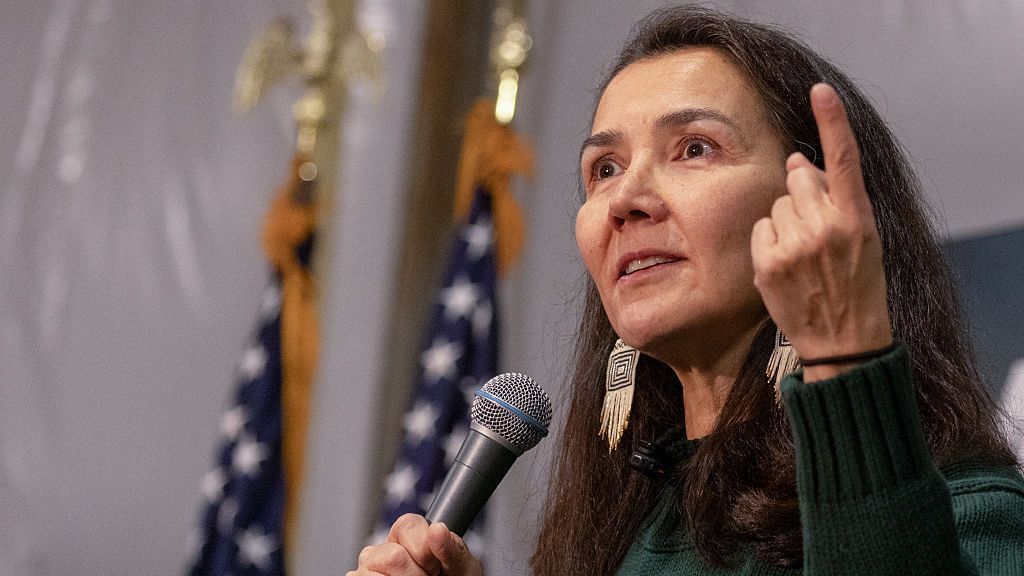
In a closely contested race marked by ballot doppelgangers and court battles, Democrat Mary Peltola has emerged as the winner of Alaska's US Senate election. The victory was announced two weeks after polling day due to logistical challenges in counting votes across Alaska's expansive territory. This win represents the ninth Senate seat that Democrats have taken from Republican control in this year's midterm elections, enhancing their majority in the US Senate and giving them full control over both houses of Congress for the remainder of Donald Trump's presidency. With the win, Democrats will hold 56 seats in the 100-member Senate, also having regained control of the House of Representatives. In her victory speech, Peltola expressed concerns about the current state of politics in Washington D.C., stating that it was not working for Alaska. She cited conversations with elders lamenting empty fish racks and parents making tough choices between heating their homes and buying food.
The Peltola campaign faced criticism following reports that Democrats attempted to recruit a candidate named Daniel J Sullivan, who shared a name with the incumbent Republican Senator Dan S Sullivan, in an alleged attempt to confuse voters. State courts eventually ruled that both candidates could remain on the ballot, and election officials took measures to distinguish them on voting materials. Peltola's campaign denies any knowledge of the alleged plot, but investigations have been launched by the justice department, Alaska's Republican governor, and the Trump administration. A lawsuit was filed to stop the certification of the election results if the incumbent Republican Senator Sullivan lost, but a federal judge dismissed the case following legal challenges from Alaska election officials and voting groups.
In Alaska's ranked-choice voting system, voters could list both Daniel J Sullivans as their first and second choices. After the initial round of voting, votes from the non-incumbent Sullivan were reallocated to the incumbent if they had been listed as a voter's second choice. Experts suggest that this process made it difficult for any potential spoiler candidate to significantly impact the results.