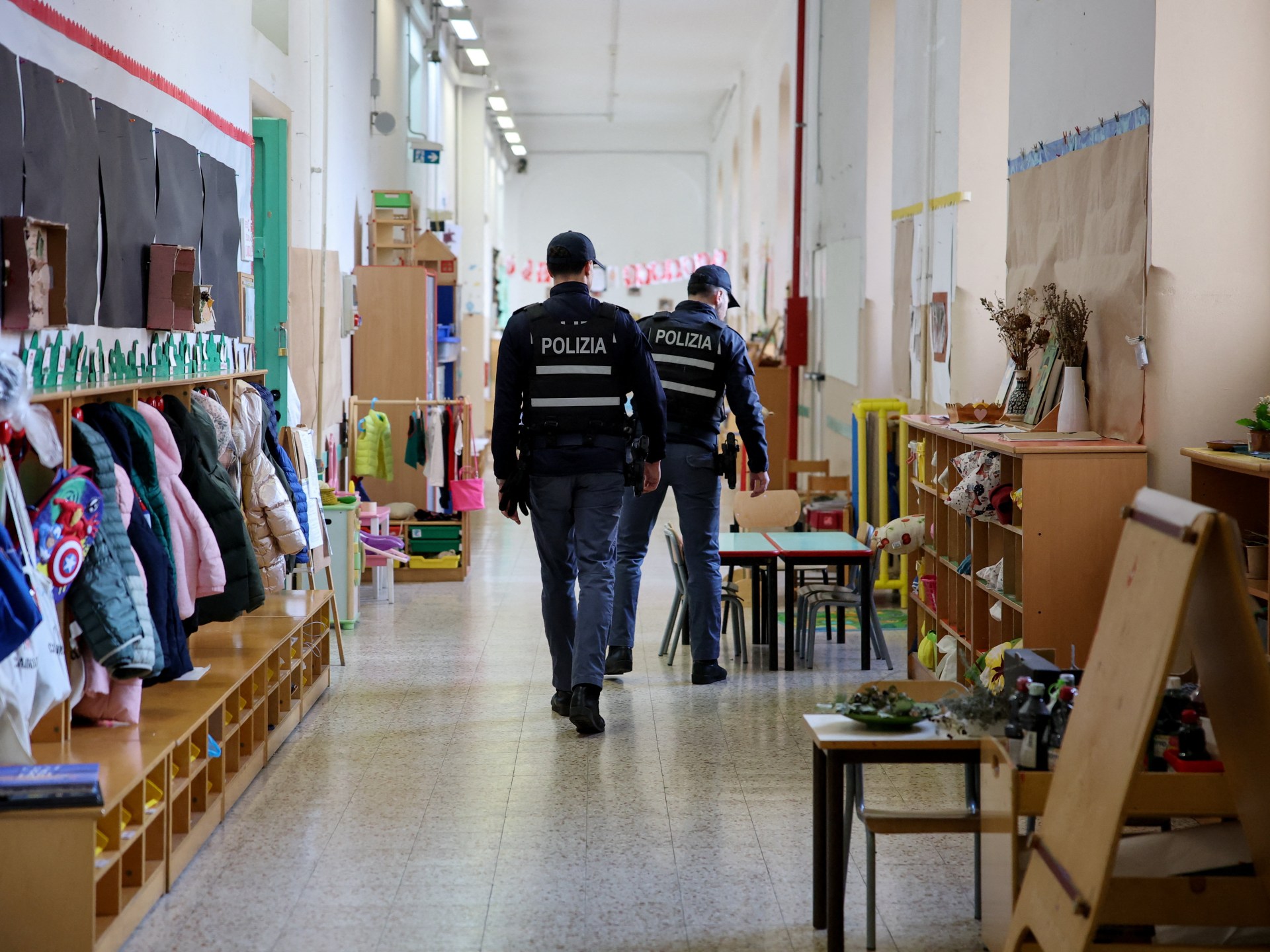
Schools across Italy were evacuated on Wednesday after receiving a hoax bomb threat via email. Italian Prime Minister Giorgia Meloni confirmed that the threats did not pose any concrete danger, but investigations are ongoing, and government ministers have been convened to discuss the matter. The emails also reportedly contained a threat against Meloni, allegedly signed by "Mikhail Andropov, leader of the Vilayat of Misoginistan." Similar alerts were received in Scotland and Northern Ireland, although schools there have been advised to stay open due to the police not considering them credible threats. The same author claimed responsibility for similar email bomb threats sent last month to newsrooms in Ireland and Bulgaria. This incident comes amidst rising concerns about hybrid warfare threats across Europe, which have targeted various institutions such as supermarkets, blood banks, air traffic, and TV broadcasters. Italian Education Minister Giuseppe Valditara stated that at least 300 schools were affected by the bomb threats, with the number potentially rising. He added that it is likely a cyberattack rather than a genuine threat. Meanwhile, in Scotland and Northern Ireland, a large number of schools received threatening emails as well, but police have declared these messages hoaxes. This follows a similar mass bomb hoax email sent to Scottish schools on October 19, and recent cyberattacks on supermarkets in several European cities. The attacks resulted in hackers changing the temperature on refrigeration systems, an apparent attempt to spoil food. Last week, hackers raised the temperatures of refrigeration systems at supermarkets in Germany, Romania, and the UK, mirroring a previous cyberattack that swept hundreds of supermarkets across France in October. On Tuesday, France accused Iran of a cyberattack that disabled refrigerators in hundreds of supermarkets, but Tehran rejected these accusations as "baseless" and "hostile." Some European officials suspect Russia of orchestrating the campaign to disrupt daily life in countries supporting Ukraine after Moscow's full-scale invasion. However, Russia denies these accusations and describes them as a smear campaign.
On Wednesday, Italian schools were evacuated due to a hoax bomb threat via email. The threats did not pose any concrete danger, according to Prime Minister Giorgia Meloni, but investigations are ongoing, and government ministers have been convened. Similar alerts were received in Scotland and Northern Ireland, although these schools have been advised to stay open due to the police considering them hoaxes. The same author claimed responsibility for similar email bomb threats sent last month to newsrooms in Ireland and Bulgaria. This incident comes amidst rising concerns about hybrid warfare threats across Europe, which have targeted various institutions such as supermarkets, blood banks, air traffic, and TV broadcasters. Italian Education Minister Giuseppe Valditara stated that at least 300 schools were affected by the bomb threats, with the number potentially rising. He added that it is likely a cyberattack rather than a genuine threat. Meanwhile, in Scotland and Northern Ireland, a large number of schools received threatening emails as well, but police have declared these messages hoaxes. This follows a similar mass bomb hoax email sent to Scottish schools on October 19, and recent cyberattacks on supermarkets in several European cities. The attacks resulted in hackers changing the temperature on refrigeration systems, an apparent attempt to spoil food. Last week, hackers raised the temperatures of refrigeration systems at supermarkets in Germany, Romania, and the UK, mirroring a previous cyberattack that swept hundreds of supermarkets across France in October. On Tuesday, France accused Iran of a cyberattack that disabled refrigerators in hundreds of supermarkets, but Tehran rejected these accusations as "baseless" and "hostile." Some European officials suspect Russia of orchestrating the campaign to disrupt daily life in countries supporting Ukraine after Moscow's full-scale invasion. However, Russia denies these accusations and describes them as a smear campaign.
Italian schools were evacuated on Wednesday due to a hoax bomb threat via email. Italian Prime Minister Giorgia Meloni confirmed that the threats did not pose any concrete danger, but investigations are ongoing, and government ministers have been convened to discuss the matter. Similar alerts were received in Scotland and Northern Ireland, although these schools have been advised to stay open due to the police considering them hoaxes. The same author claimed responsibility for similar email bomb threats sent last month to newsrooms in Ireland and Bulgaria. This incident comes amidst rising concerns about hybrid warfare threats across Europe, which have targeted various institutions such as supermarkets, blood banks, air traffic, and TV broadcasters. Italian Education Minister Giuseppe Valditara stated that at least 300 schools were affected by the bomb threats, with the number potentially rising. He added that it is likely a cyberattack rather than a genuine threat. Meanwhile, in Scotland and Northern Ireland, a large number of schools received threatening emails as well, but police have declared these messages hoaxes. This follows a similar mass bomb hoax email sent to Scottish schools on October 19, and recent cyberattacks on supermarkets in several European cities. The attacks resulted in hackers changing the temperature on refrigeration systems, an apparent attempt to spoil food. Last week, hackers raised the temperatures of refrigeration systems at supermarkets in Germany, Romania, and the UK, mirroring a previous cyberattack that swept hundreds of supermarkets across France in October. On Tuesday, France accused Iran of a cyberattack that disabled refrigerators in hundreds of supermarkets, but Tehran rejected these accusations as "baseless" and "hostile." Some European officials suspect Russia of orchestrating the campaign to disrupt daily life in countries supporting Ukraine after Moscow's full-scale invasion. However, Russia denies these accusations and describes them as a smear campaign.