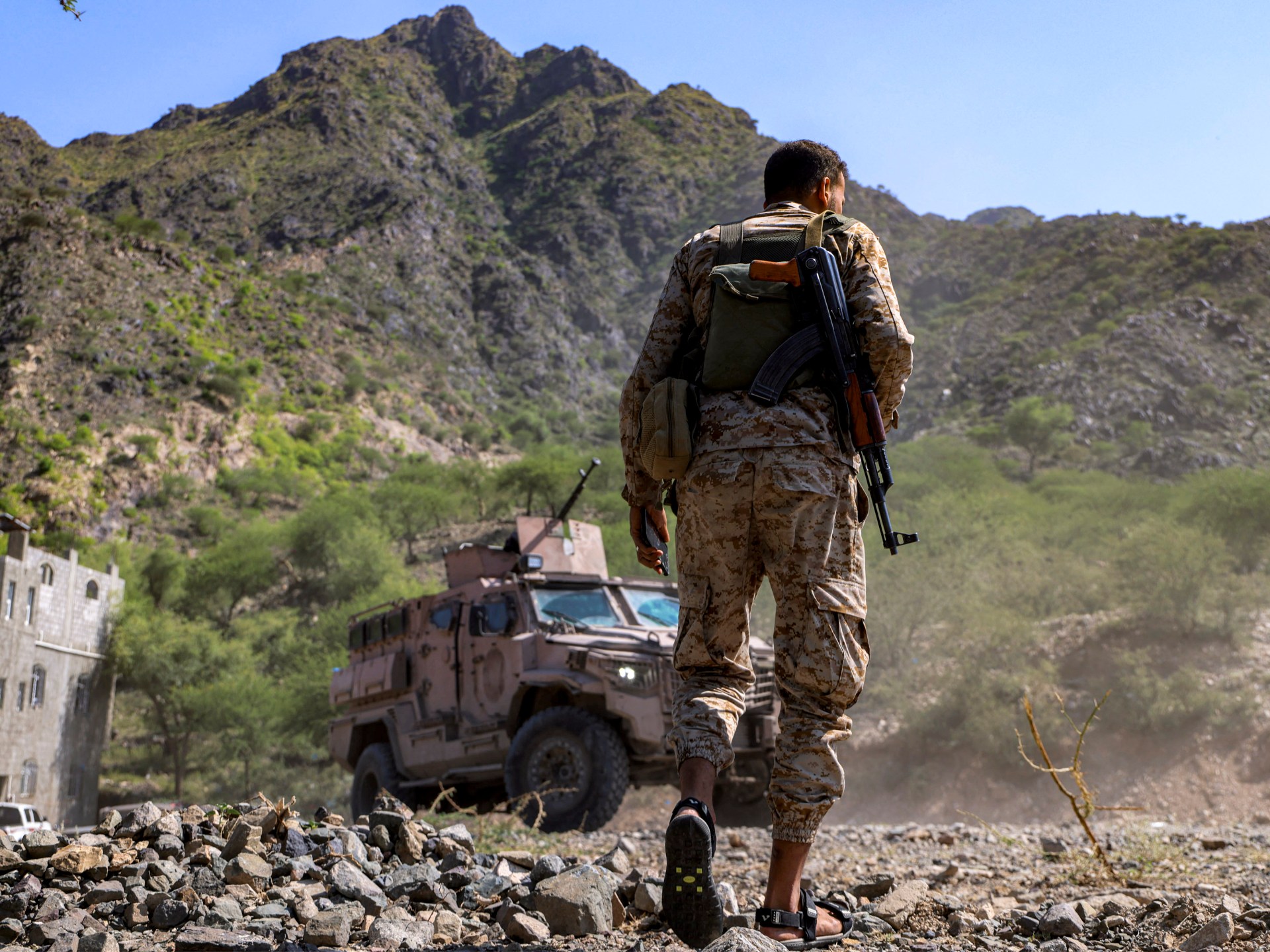
In a bid to thwart Houthi territorial gains in the southwest of Yemen, government forces have launched 661 attacks on Houthi positions across multiple fronts, according to the Yemeni army. The offensive, part of the "Dawn of Yemen" operation, saw 15 air strikes, 526 artillery attacks, 53 drone strikes, and 67 rocket attacks carried out between October 5 and the present. Military spokesperson Colonel Majed al-Nuzaili reported these operations destroyed or damaged 71 military vehicles and pieces of equipment, as well as command centers, observation posts, and fortifications, leaving 173 Houthi fighters dead or injured. The government forces, backed by the Popular Resistance, are continuing to confront Houthi movements in several provinces while focusing on southern fronts. The military is determined to continue its offensive until it achieves its objectives while taking measures to protect civilians and civilian infrastructure. This escalation follows a series of battlefield setbacks for government-aligned forces, which have withdrawn from strategic positions near the Bab al-Mandeb Strait and are repositioning to defend Aden, Yemen's temporary capital. The Houthis have reportedly cut off a key government supply route along the Red Sea coast, forcing troops to abandon several positions as concerns grow over a possible Houthi offensive towards Aden. Additionally, Yemen's parliament unanimously approved a bill designating the Houthis as a "terrorist organization" and criminalizing their activities, financing, and weapon supply. The legislation, now awaiting enactment by Rashad al-Alimi, chairman of Yemen’s Presidential Leadership Council, aims to prosecute violations attributed to the group, freeze and confiscate affiliated assets, and impose tougher penalties for offences.
The Yemeni army has intensified its offensive against Houthi positions across several fronts as part of the "Dawn of Yemen" operation, following a series of battlefield setbacks for government-aligned forces. The offensive, which began six weeks ago on October 5, includes 15 air strikes, 526 artillery attacks, 53 drone strikes, and 67 rocket attacks, resulting in the death or injury of 173 Houthi fighters and the destruction or damage of 71 military vehicles and pieces of equipment. The government forces are focusing on southern fronts while continuing to confront Houthi movements in several provinces. This military escalation coincides with a political development as Yemen's parliament unanimously approved a bill designating the Houthis as a "terrorist organization" and criminalizing their activities, financing, and weapon supply. The legislation aims to prosecute violations attributed to the group, freeze and confiscate affiliated assets, and impose tougher penalties for offences. Notably, the Houthis have reportedly cut off a key government supply route along the Red Sea coast, forcing troops to abandon several positions as concerns grow over a possible Houthi offensive towards Aden, Yemen's temporary capital.
In an effort to regain territory from the Houthis and defend Aden, Yemen's temporary capital, government forces have launched a series of attacks on Houthi positions. The offensive, part of the "Dawn of Yemen" operation, has resulted in 173 Houthi casualties and damage to 71 military vehicles and pieces of equipment. The operations include air strikes, artillery attacks, drone strikes, and rocket attacks, with 661 attacks reported since October 5. Government forces are focusing on southern fronts while also confronting Houthi movements in several provinces. This escalation follows a series of battlefield setbacks for government-aligned forces, which have withdrawn from strategic positions near the Bab al-Mandeb Strait. The Houthis have reportedly cut off a key government supply route along the Red Sea coast, forcing troops to abandon several positions as concerns grow over a possible Houthi offensive towards Aden. In a related development, Yemen's parliament has unanimously approved a bill designating the Houthis as a "terrorist organization" and criminalizing their activities, financing, and weapon supply. The legislation aims to prosecute violations attributed to the group, freeze and confiscate affiliated assets, and impose tougher penalties for offences.