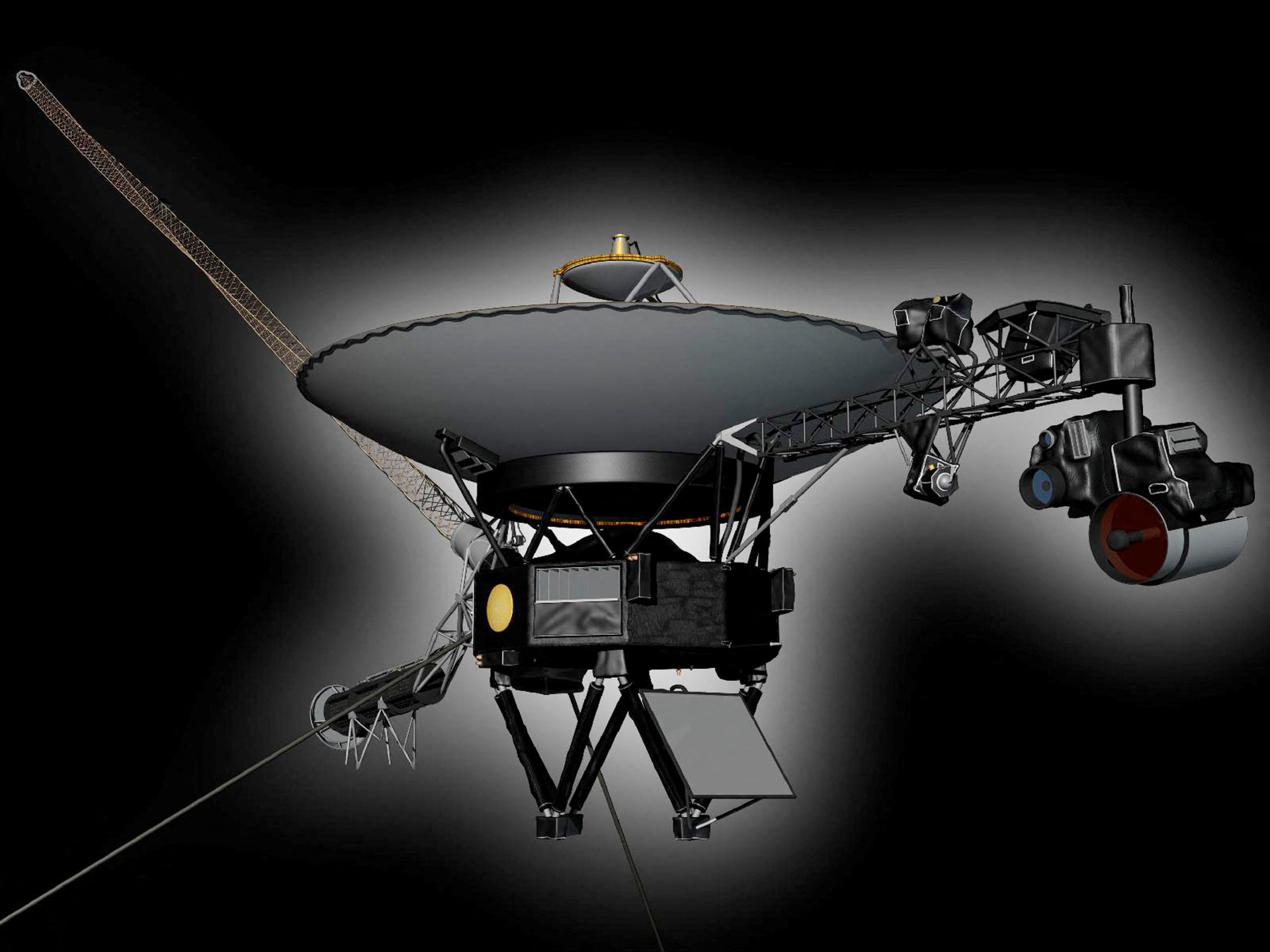
NASA's Voyager 1 probe, the most distant human-made object in space, has reached a significant milestone by traveling one light-day (approximately 26 billion km) from Earth. This achievement was announced on Wednesday and marks nearly 50 years since its launch in 1977. A light-day refers to the distance light can travel in 24 hours, making it a day's journey for messages sent from Earth to reach Voyager 1, with another day required for a response.
The milestone underscores the immense vastness of space, according to NASA scientist Tiffany Kataria. She further emphasized that even though much of humanity's dreams involve traveling to other stellar systems, it took Voyager 1 nearly half a century just to reach the edge of our own solar system, let alone a light-day. Many exoplanetary systems are at least several light-years away. NASA predicts that it will take Voyager 1 about 18,000 years to travel a full light-year.
Voyager 1 and its twin, Voyager 2, are the only spacecraft to have reached interstellar space, which lies beyond the Sun's heliosphere. While some of Voyager 1's equipment, including cameras, has been shut off remotely to save power, it continues to study phenomena such as magnetic fields. The data gathered helps researchers understand the gas, dust, and other material that exists between stars.
Both craft carry "Golden Records," 30cm gold-plated copper discs designed to communicate our world's story to extraterrestrial life. During their journeys, the Voyagers explored the giant planets Jupiter, Saturn, Uranus, and Neptune. Notably, images taken by Voyager 1 first revealed rings around Jupiter and helped scientists comprehend its extreme vortices and weather patterns in the atmosphere, according to Kataria.