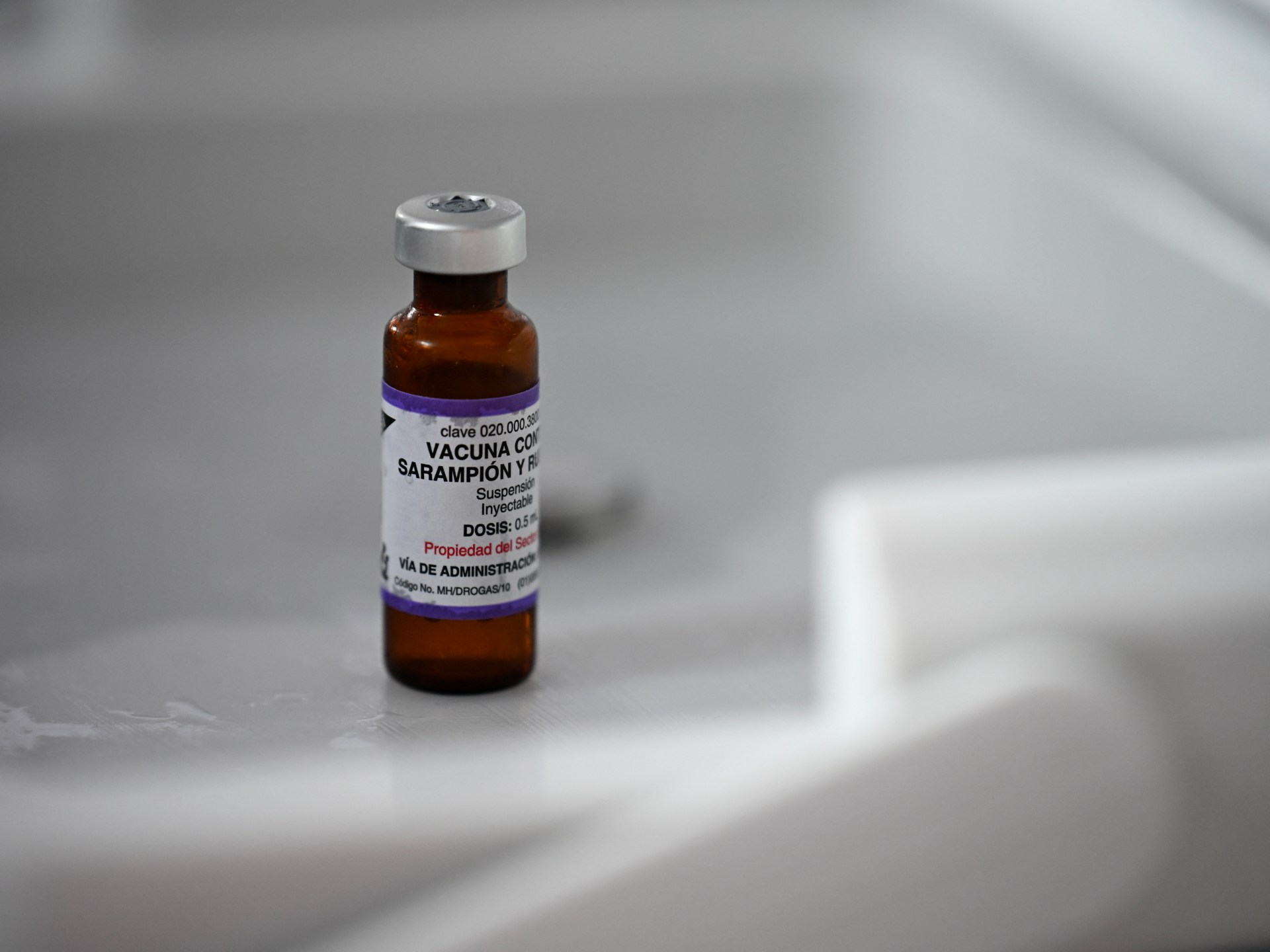
In a regrettable turn of events, Pennsylvania has recorded its eighth measles-related death this year, with an unidentified individual from Clinton County succumbing to the disease on Wednesday. The Department of Health (DOH) of Pennsylvania reported the fatality to the Centers for Disease Control and Prevention (CDC). This latest death comes following the United States' loss of its 26-year measles elimination status, a designation that was revoked by the Pan American Health Organization (PAHO) on Tuesday. The US has been grappling with its worst measles outbreak in over three decades since the beginning of 2026, with the CDC reporting 5,412 confirmed cases to date. Pennsylvania alone has reported 1,589 cases across 46 of its 67 counties.
In an effort to combat the outbreak, approximately 300 staff members from the DOH are working collaboratively with residents, community organizations, and healthcare providers. This collaboration aims to provide fact-based information and facilitate access to the measles, mumps, and rubella (MMR) vaccine. Since the outbreak's emergence in late April, state health officials have administered over 11,500 MMR vaccine doses, including more than 7,200 shots at pop-up clinics.
Experts attribute the rising number of measles cases to vaccine hesitancy in recent years. Measles is a highly contagious disease that can spread rapidly through coughing or sneezing, with an estimated 90% of those who are not immune contracting it upon exposure. The virus can survive for up to two hours in the air. Critics have pointed to leadership under US President Donald Trump as contributing to the measles outbreaks, with Health Secretary Robert F Kennedy Jr questioning the efficacy and safety of vaccines like the MMR shot. Despite these concerns, both Kennedy and the CDC remain committed to stopping measles outbreaks and regaining the country's elimination status. The CDC Director Erica Schwartz reiterated that vaccination is what protects Americans, not the elimination designation.
In a concerning development, Pennsylvania has suffered its eighth measles-related death this year, with an unnamed resident of Clinton County succumbing to the disease on Wednesday. This unfortunate event was reported by the Pennsylvania Department of Health (DOH) to the Centers for Disease Control and Prevention (CDC). The US is currently experiencing its worst measles outbreak in over three decades, with the CDC reporting 5,412 confirmed cases since the beginning of 2026.
To combat this outbreak, the Pennsylvania DOH has mobilized around 300 staff members to work with residents, community organizations, and healthcare providers. Their mission is to educate the public and ensure access to the measles, mumps, and rubella (MMR) vaccine. Since late April, when the outbreak began, state health officials have administered over 11,500 MMR vaccine doses, including more than 7,200 shots at pop-up clinics.
Experts believe that vaccine hesitancy in recent years has contributed to the rising number of measles cases. Measles is a highly contagious disease that can be easily spread through coughing or sneezing, with an estimated 90% of those who are not immune contracting it upon exposure. The virus can survive for up to two hours in the air. Critics have pointed to leadership under US President Donald Trump as potentially contributing to the measles outbreaks, with Health Secretary Robert F Kennedy Jr questioning the efficacy and safety of vaccines like the MMR shot.
In a grim turn of events, Pennsylvania has recorded its eighth measles-related death this year, with an unidentified individual from Clinton County succumbing to the disease on Wednesday. This unfortunate incident was reported by the Pennsylvania Department of Health (DOH) to the Centers for Disease Control and Prevention (CDC). The US is currently grappling with its worst measles outbreak in over three decades, with the CDC reporting 5,412 confirmed cases since the beginning of 2026.
In an effort to combat this ongoing outbreak, the Pennsylvania DOH has taken a proactive approach. Approximately 300 staff members from the DOH are working closely with residents, community organizations, and healthcare providers. Their goal is to provide fact-based information and facilitate access to the measles, mumps, and rubella (MMR) vaccine. Since the outbreak began in late April, state health officials have administered over 11,500 MMR vaccine doses, including more than 7,200 shots at pop-up clinics.
Experts attribute the rising number of measles cases to vaccine hesitancy in recent years. Measles is a highly contagious disease that can be easily spread through coughing or sneezing, with an estimated 90% of those who are not immune contracting it upon exposure. The virus can survive for up to two hours in the air. Critics have pointed to leadership under US President Donald Trump as potentially contributing to the measles outbreaks, with Health Secretary Robert F Kennedy Jr questioning the efficacy and safety of vaccines like the MMR shot. Despite these concerns, both Kennedy and the CDC remain committed to stopping measles outbreaks and regaining the country's elimination status.