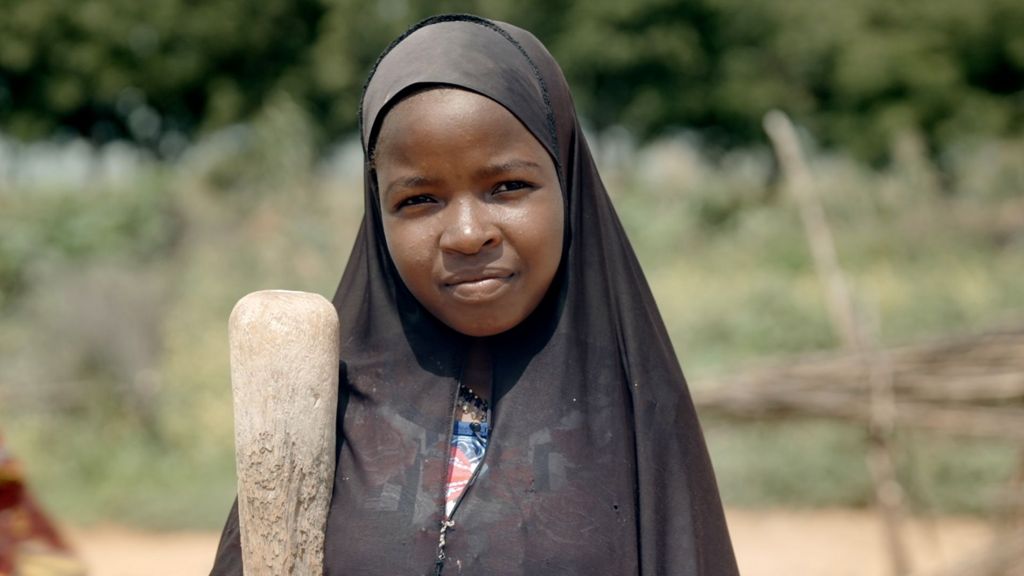
In a heartrending tale, Hadiza, a 15-year-old girl from northern Nigeria, recounts her struggle to attend school due to circumstances beyond her control. Two years ago, armed men raided her village, abducting a girl and sending her family fleeing, eventually settling in a displacement camp. Despite the hardships, Hadiza was able to attend school briefly until she married at 13, a common tradition in her community that ends girls' education.
Now living with her in-laws, Hadiza is one of nearly 19 million Nigerian children missing out on an education, according to Unesco estimates from 2024. In response, an educational program has been launched, broadcasting lessons in English, math, and science across West Africa via social media, local television partnerships, and radio.
Twelve-year-old Rukayya, another resident of the Goronyo displacement camp, echoes Hadiza's sentiments. Every day, she gathers firewood to sell and begs for money to feed her siblings, stating that if her father were alive, she wouldn't have to. Her father was killed by bandits a year ago, forcing her family to flee their home. She and Hadiza are among 670,000 people displaced in north-west and central Nigeria due to armed robbery, kidnappings, and attacks by militant Islamist groups and criminal gangs known as bandits.
School attendance in Goronyo's displacement camp is sporadic due to various factors. Parents often pull their children out of school because they are needed to earn money for the family. The school faces funding inconsistencies, lacks enough teachers and classrooms, and has been targeted by bandit attacks, causing some parents to withdraw their children for safety reasons.
Nigeria's education system is plagued by decades of underfunding, poor resource oversight, and shortages, affecting both public schools and the traditional Almajiri system that provides Islamic education. Minister of State for Education Prof Suwaiba Sa'id acknowledges these issues but claims that the number of children out of school is lower than reported, with initiatives like Lumina designed to address decades of neglect. Lumina aims to support one million girls by 2030, providing an accelerated education to help them catch up. Despite the challenges, Nigerian law prohibits marriage under the age of 18, and efforts are being made to ensure every child receives nine years of free, compulsory education.