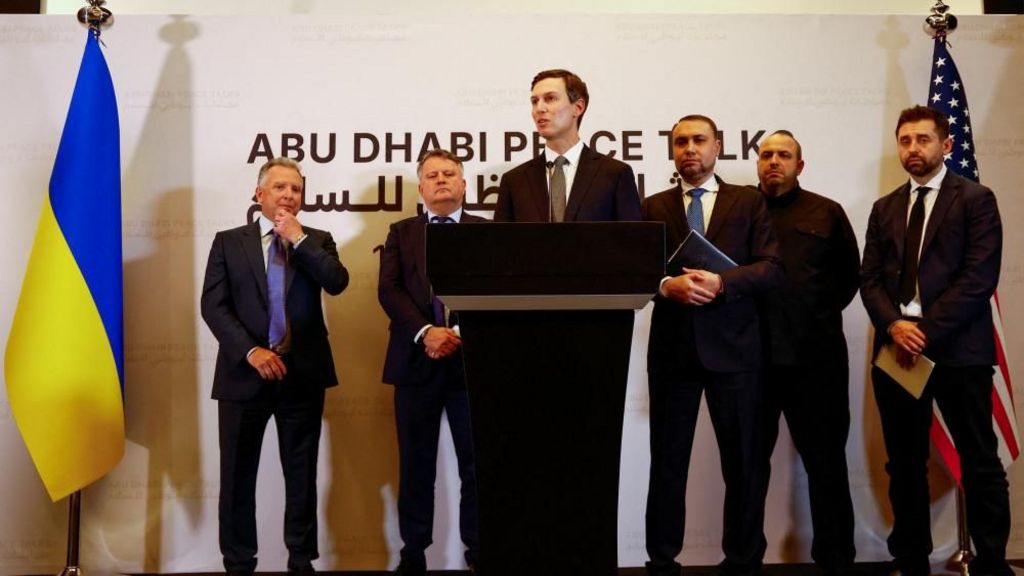
Following a second day of negotiations in Abu Dhabi, the trilateral discussions between Russia, Ukraine, and the United States regarding the ongoing conflict in Ukraine have concluded without any significant breakthrough. The talks, which were the first since February, centered around Europe's post-war security framework, with the US envoys scheduled to meet Putin and Zelensky on Thursday. According to Davyd Arakhamia from Ukraine's negotiating team, this round of discussions was one of the most challenging due to Russia's strict directives. However, he expressed optimism about the "good momentum" and urged for a second round of talks to be organized as soon as possible. Both Moscow and Kyiv have confirmed that a large-scale prisoner exchange is imminent.
The latest round of discussions was framed around the "security architecture" of Europe, with potential implications for Ukraine's allies providing aid in case of another attack, despite Ukraine not being a NATO member. For Moscow, it is expected to include limiting NATO influence in eastern Europe, a concern for the Kremlin since its eastward expansion. US negotiator Steve Witkoff and Jared Kushner - President Donald Trump's son-in-law - are scheduled to meet Russian President Vladimir Putin on Thursday before discussing with Ukraine's Volodymyr Zelensky in Dublin.
There is ongoing disagreement between the parties regarding whether discussions on a future security framework should precede or follow a ceasefire. The United States is keen to involve Europeans in the negotiations, with Kushner stating that getting them "added to the format" would be on the agenda for his talks with Putin. However, there are still disagreements over the disputed region of Donetsk, which has been mostly occupied by Russia. The core obstacle to any settlement remains this issue, with Moscow demanding Ukraine relinquish parts of Donetsk it still holds, while Kyiv wants to freeze the contact line to maintain control over those areas.
The reality of these negotiations is complicated by a lack of trust between the parties involved due to the conflict's emotional and complex nature. Kushner acknowledged that "deals are very hard and complex, and this one is very emotional, very complex." Despite the lack of progress, both sides remain hopeful for a peaceful resolution in the future.