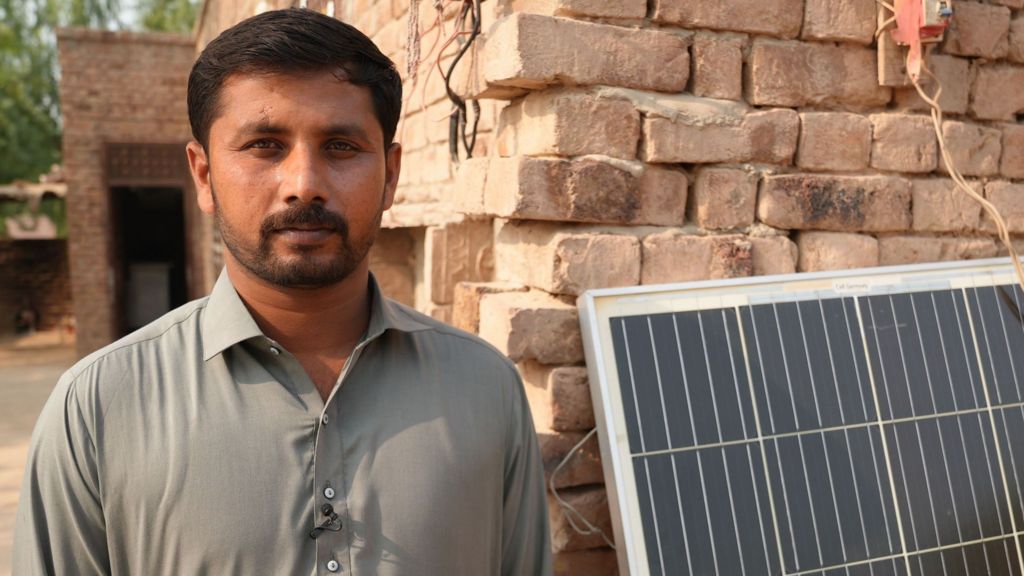
In rural Punjab, Faisal Shahzad, three months married, proudly showcases his prized possessions - a 340W solar panel and an air-conditioning unit. The shift to renewable energy is evident across Pakistan, with seven million households now owning solar panels. This surge in domestic solar adoption has skyrocketed the share of electricity generated from solar energy from 1% to 28% between 2018 and 2025, according to Renewables First. The trend, driven by individual households seeking relief from escalating electricity prices and an often unreliable national grid, has made Pakistan a beacon for solarisation. However, this grassroots revolution is straining the national grid system, causing concerns about the so-called utility death spiral - a scenario where fewer customers remaining to cover the fixed costs of maintaining the grid can lead to price increases and more people switching to solar, creating a vicious cycle. The government acknowledges the financial impact, with Leghari stating that in just two years, the exodus from the grid has cost consumers over $500 million annually. To prevent this, the government aims to make the grid more competitive by improving efficiency, storage, and innovation. Despite these efforts, the solar boom continues, with widespread adoption in industries like Kohinoor Textiles Mills in Islamabad, powered entirely by solar energy during sunny days.
In a bid to reduce energy costs, companies like Kohinoor are also investing in industrial batteries to store excess solar energy for use during cloudy or nighttime hours. The mill's CEO, Taufique Sayeed Saigol, reveals plans not to disconnect entirely from the grid but to reduce dependence on it. The government's ambition is to power 90% of Pakistan with clean energy by 2036, including renewables and nuclear, while decreasing reliance on imported energy from 26% to 4%. As the solar revolution marches on, managing its impact on the national grid becomes a crucial challenge for Pakistan.
In just three months, Faisal Shahzad's home in rural Punjab is transformed by gifts from his bride's family - jewelry, silverware, sofas, and an air-conditioning unit, but the most valuable addition under his bed: a 340W solar panel. As the sun rises, Faisal activates the solar panel, powering their home through the day without relying on the national grid. "In the summer we ran it from 8 am until evening," he says, adding they didn't need to use grid power at all during the day. This new trend of solar adoption in Pakistan has seen a surge in the past few years, with seven million households now owning panels and the share of electricity generated from solar energy rising from 1% to 28%, according to Renewables First.
People used to gift motorbikes or other household items at weddings, but Shahzad notes that now they give a solar panel and an air cooler. This shift in gifting customs reflects the growing importance of renewable energy in Pakistan. However, while the solar boom brings clear benefits, particularly for a country that imports huge amounts of fuel, there are concerns about its impact on the national grid system. The government fears a utility death spiral, where people buying less energy from the national grid can lead to rising prices and increased numbers switching to solar, creating a vicious cycle.
Pakistan's government is working to address this issue by making the grid more competitive and efficient, renegotiating contracts with private power producers, and investing in better storage, less waste, and innovation. Despite these efforts, the solar boom continues, with widespread adoption in industries like Kohinoor Textiles Mills in Islamabad, powered entirely by solar energy during sunny days. The government aims to power 90% of Pakistan with clean energy by 2036, including renewables and nuclear, while decreasing reliance on imported energy from 26% to 4%. As the solar revolution marches on, managing its impact on the national grid becomes a crucial challenge for Pakistan.