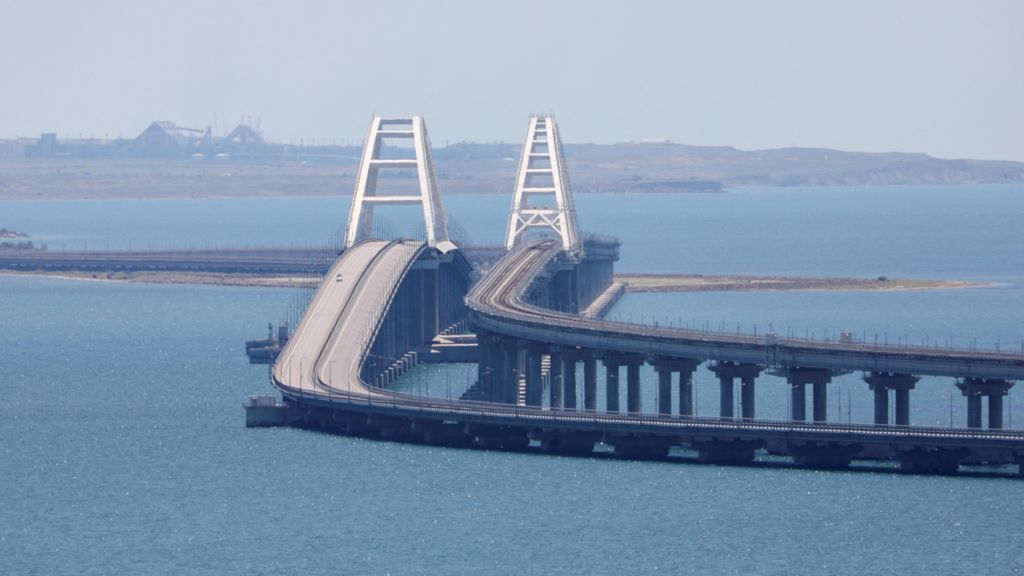
In a significant escalation of the ongoing conflict, Russia reported over 2,000 drone attacks, the largest since the war began, with the Crimean Bridge, a symbolic link between Russia and occupied Crimea, sustaining minor damage. The attacks also targeted several oil refineries across the region. Simultaneously, Kyiv faced a record 17 air raid alerts in a single day, resulting in civilian casualties and power outages for thousands. The intensified strikes come days after diplomatic talks aimed at ending the war.
The Crimean Bridge, officially known as Kerch Bridge, was built by Russia following its annexation of the peninsula in 2014. It was inaugurated by Russian President Vladimir Putin in 2018 and is heavily fortified with multiple layers of aerial and maritime defenses. The drone attack reportedly resulted from debris impact rather than a direct hit, according to pro-war military commentators. Ukrainian authorities have yet to respond to requests for comment regarding the attacks.
Meanwhile, several energy facilities were hit, including an oil refinery in Ilsky, Krasnodar region, where falling drone debris sparked a fire and injured six people, including children. President Volodymyr Zelensky previously accused Russia of targeting Ukraine's bridges to divide the country and make life difficult for its citizens.
Peace remains elusive despite high-level diplomacy and visits by US envoys to both Putin and Zelensky. Moscow continues to demand that Ukraine cede territory and abandon its pursuit of NATO membership. The Kremlin has also started discussing the need to reevaluate Europe's security architecture, which is often interpreted as a call for reduced NATO presence in countries near Russia. This proposed conversation has raised concerns among Ukraine's European partners who fear their continent's security could be reshaped without their involvement.
A six-nation team representing Britain, France, Germany, Italy, Poland, and EU institutions will represent Europe in future talks with Russia, Ukraine, and the US. However, the Kremlin remains dismissive of European input, expressing doubts about their ability to contribute positively to the peace process.