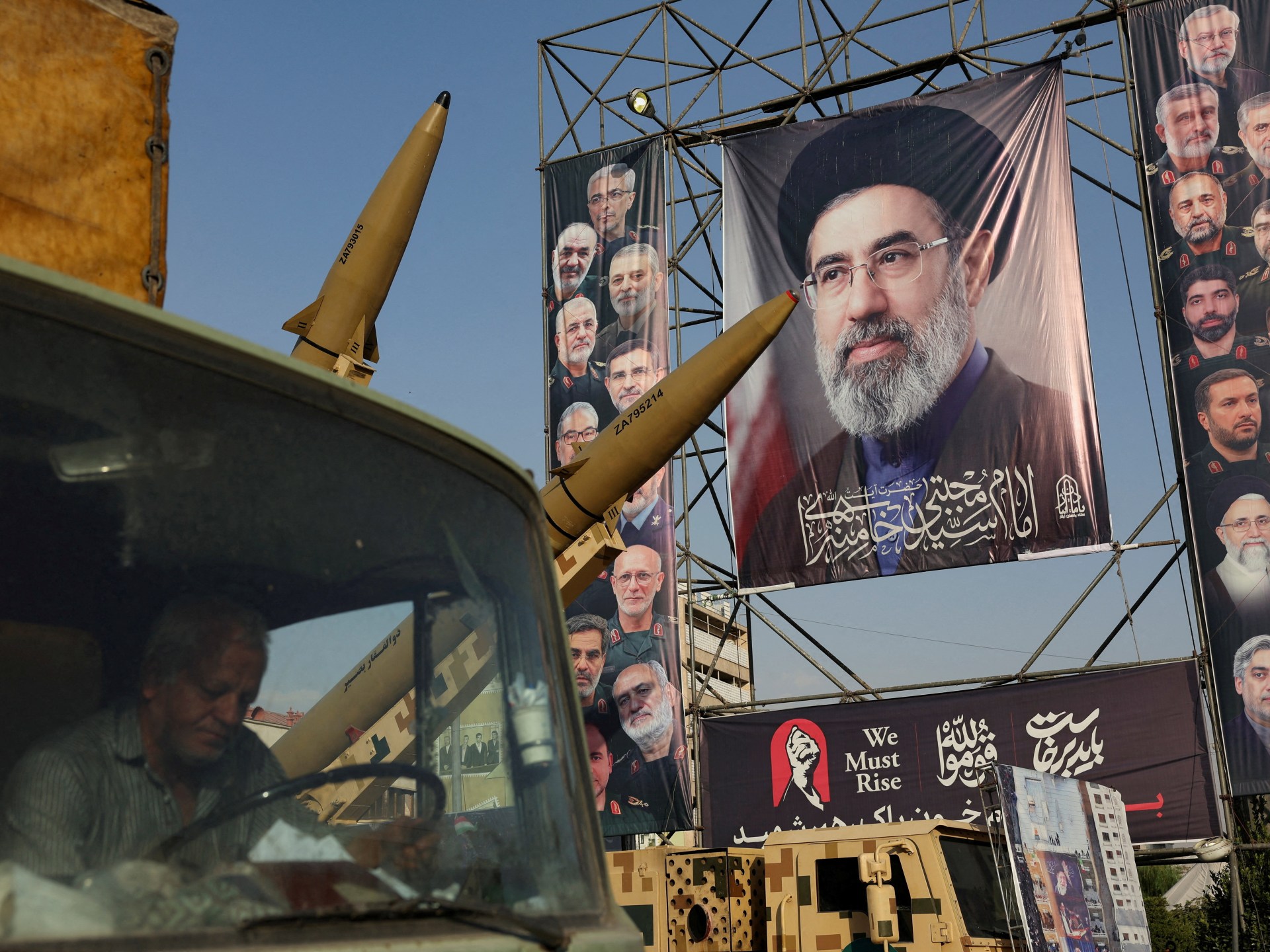
In a significant move that raises concerns over potential targets beyond the Middle East, Iran's Islamic Revolutionary Guard Corps (IRGC) announced on Saturday that it has lifted its self-imposed 2,000km limit on the range of its ballistic missiles. The announcement was made by IRGC spokesman Brigadier-General Hossein Mohebbi during a news conference in Tehran. While Mohebbi did not confirm if Iran already possesses missiles exceeding the cap, he suggested that Iran would demonstrate its capabilities through action rather than statements. This decision comes days after Supreme Leader Mojtaba Khamenei's warning of an unlimited response to any threat from the United States or Israel, reflecting Iran's hardened stance and shift towards an offensive military doctrine.
The lifting of the limit could enable Iran to position some of its rocket launchers in the country’s east, potentially reaching targets such as Israel with a larger range. The US and its European allies fear this could allow Iran to target US bases in the Indian Ocean and Europe. Tensions escalated further in March when the United Kingdom accused Iran of firing missiles towards the joint US-UK base at Diego Garcia, despite Iran denying the allegations. The UK, France, and Germany have claimed that their modeling places a lighter-warhead version of Iran’s Khorramshahr missile within a range of approximately 3,000km.
The IRGC's decision to end its self-imposed limit seems to mark a departure from Tehran's assurances to Europe regarding missile range. Relations between Europe and Iran have deteriorated over Iran's nuclear program and regional geopolitical ambitions. The European Union designating the IRGC as a "terrorist" group and allowing the US to use bases on the continent has been met with criticism from Iran, which has issued repeated warnings to countries hosting US military assets. In August, Iran sent a diplomatic note cautioning Bulgaria against letting US military aircraft use its airports for operations against Iran, following Bulgaria's parliamentary approval of hosting up to eight US KC-135 refuelling tankers at Bezmer airbase in July.
The repercussions of Iran's decision to abandon the missile range cap are still unfolding, with experts and world leaders closely monitoring the situation for potential escalations. The move signals a more assertive stance from Iran, challenging the regional balance of power and potentially heightening tensions with its adversaries.