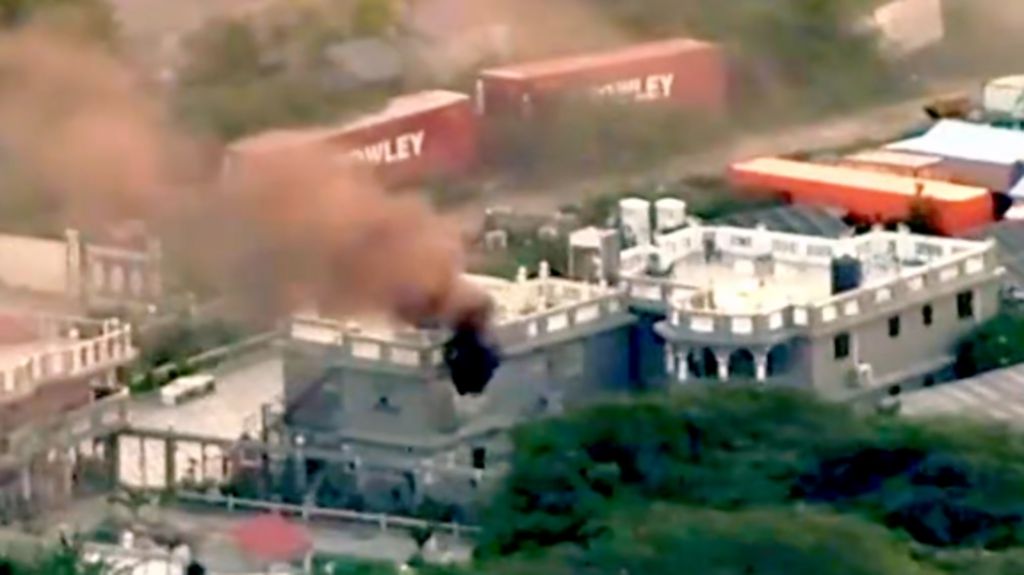
El Salvador's military has launched an attack on the headquarters of one of Haiti's largest crime gangs, the infamous 400 Mawozo, according to President Nayib Bukele. The assault targeted a complex on the outskirts of Port-au-Prince, Haiti's capital, and was reportedly supported by Haiti's National Police drone task force and Salvadoran soldiers. The attack is part of El Salvador's mission to rescue four missing technicians abducted in October and follows the deployment of more than 2,000 Salvadoran troops to Haiti last month. President Bukele announced the news on social media, claiming that most gang members fled without resistance. However, the exact number of casualties remains unconfirmed, with some reports suggesting as many as 20 people were killed during the operation. These claims and whether the property in question is indeed the gang's headquarters have not been independently verified. Amnesty International has expressed concerns about the operational legitimacy and legality of Salvadoran forces' actions in Haiti, urging both countries to comply with international human rights law.
The leader of the 400 Mawozo gang, Wilson "Lanmò San Jou" Joseph, was reportedly not present during the attack on the gang's headquarters in Haiti. The infamous crime organization, known for kidnappings, extortion, murders, and arms trafficking, has been targeted by El Salvador's military as part of a mission to rescue four missing technicians abducted last October. According to social media posts from President Nayib Bukele, the attack was successful in destroying the gang's headquarters and forcing most members to flee without resistance. However, it remains unclear whether Joseph was present during the operation or if he has since gone into hiding. These claims and the extent of the damage at the property have not been independently verified, with Haitians questioning whether it has been completely destroyed or merely damaged.
Haiti's National Police drone task force and El Salvadoran soldiers have collaborated on an attack against one of Haiti's largest crime gangs, the 400 Mawozo. The assault targeted a complex on the outskirts of Port-au-Prince, Haiti's capital, and was initiated by El Salvador as part of its mission to rescue four missing technicians abducted in October. President Nayib Bukele announced the news on social media, claiming that most gang members fled without resistance. The attack is significant as it marks El Salvador's first military action on a Haitian target since deploying more than 2,000 soldiers there last month. Both countries have committed to working together, along with the UN-backed Gang Suppression Force (GSF), to regain control of territory and restore state authority in Haiti, which has been plagued by gang violence for years. Amnesty International has expressed concerns about the operational legitimacy and legality of Salvadoran forces' actions in Haiti, urging both countries to comply with international human rights law.