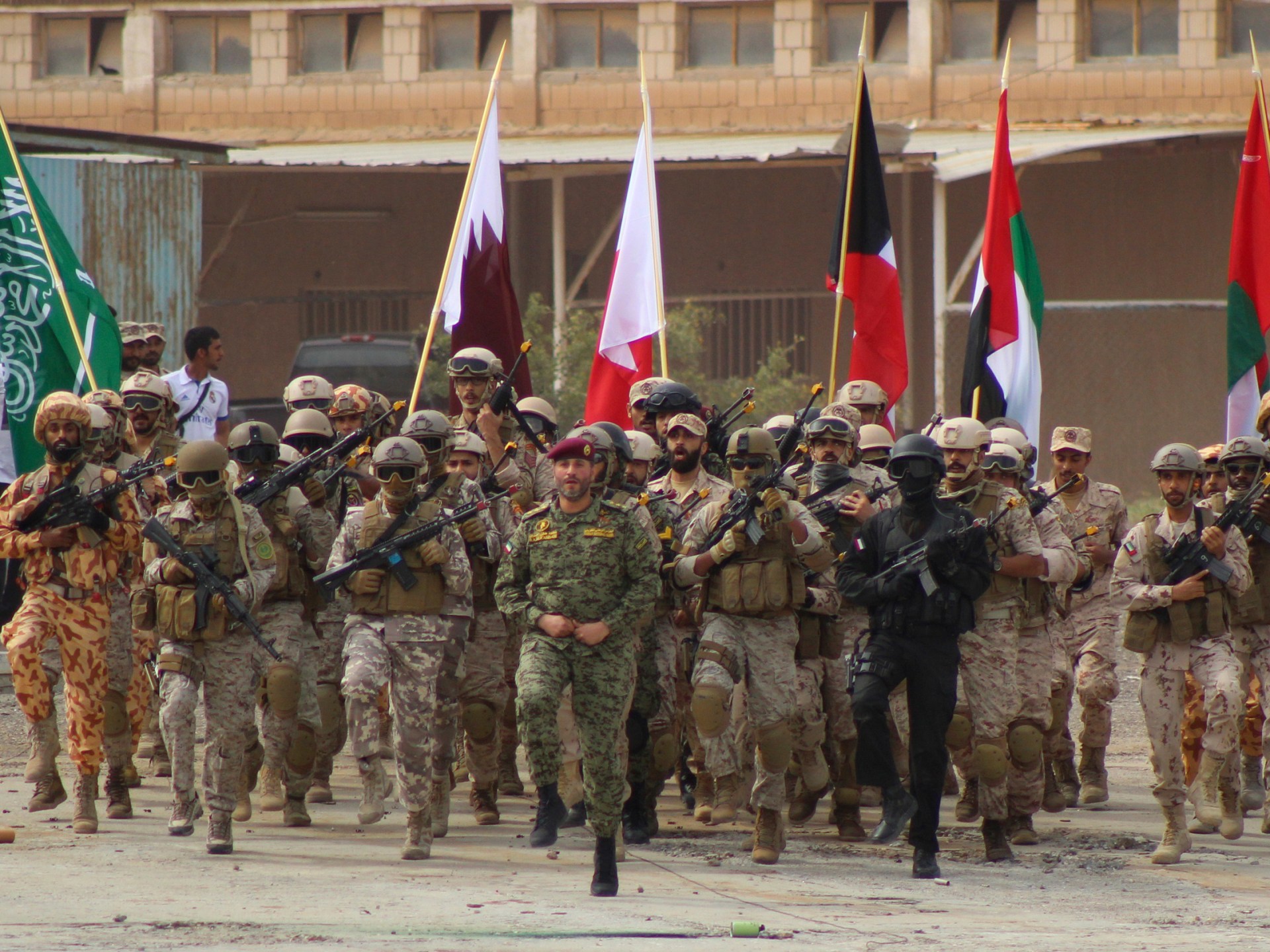
The Gulf Cooperation Council (GCC) has announced plans to establish an advanced military command base in Kuwait as a response to escalating regional challenges. The decision, made at the 23rd meeting of the GCC's Joint Defence Council, involves allocating suitable military forces to this new headquarters. The move comes amid heightened tensions in the region due to missile and drone attacks on Gulf states following the US-Israel conflict with Iran, as well as persistent Houthi attacks on Saudi Arabia. The forward base in Kuwait is expected to provide a more unified defense structure and serve as a permanent presence for the GCC's Unified Military Command. Experts suggest that this move signifies increased self-reliance in regional security while not necessarily indicating a diminished role for existing alliances, such as those with the United States. The new command center will complement existing security arrangements across the Gulf and beyond, further strengthening the collective defense of GCC member states.
SUMMARY (CONTINUED):
The proposed headquarters is significant due to its location at the northern end of the Gulf, which experts believe places a unified command at the forefront of potential threats. Kuwait, known for maintaining a moderate stance towards Iran, will host this advanced military base despite facing threats from Iraqi territory, where Iran-aligned armed groups have launched attacks against Gulf states. The headquarters aims to send a clear message of preparedness to both Iran and Iraq, while also reassuring GCC countries about their readiness for various scenarios.
SUMMARY (CONTINUED):
In addition to the new base in Kuwait, the GCC has expressed explicit condemnation of Houthi attacks on Saudi Arabia, which are perceived as violations of Islamic sanctity and a threat to regional security and sovereignty. The danger also extends to Yemen, where fighting between Iran-aligned Houthis and Saudi-backed government forces has intensified following years of relative calm. The GCC's statement regarding the new military command in Kuwait does not suggest a shift away from existing partnerships with Washington, which has historically served as the main security provider for the region. Instead, it is viewed as an additional layer of protection and a sign of the GCC's growing self-reliance in regional defense matters.