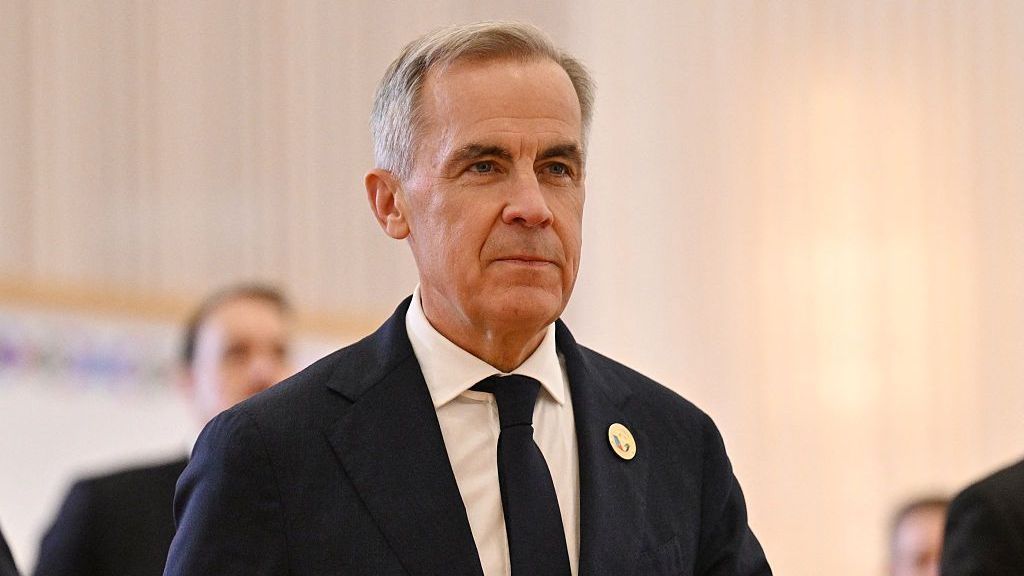
Prime Minister Mark Carney is seeking to bolster Canada's embattled automotive sector by pursuing partnerships with Chinese automakers, as trade tensions escalate between the North American nation and the United States. Carney made this announcement during his visit to China for the Asia-Pacific Economic Cooperation (APEC) summit, stating that Canada could potentially turn to European and Asian carmakers if a trade deal with the US cannot be reached. This move has sparked controversy and drawn criticism from those close to Donald Trump. The plight of Canada's auto industry has been severely impacted by the 25% tariff imposed by the U.S. President on non-American-made vehicles, leading to thousands of job losses and anxiety about the sector's future. Meanwhile, China has expressed interest in entering the North American electric vehicle (EV) market, with plans to gradually increase the number of EVs allowed into Canada from 49,000 to 70,000 by 2030. The potential entry of Chinese EV manufacturers like BYD and Chery could provide investment opportunities for Canadian-owned companies and create manufacturing jobs in the sector. However, there are concerns about job losses and the erosion of the North American auto industry, as well as potential security breaches and foreign interference from China.
In a significant departure from U.S. policy, Canada announced in January that it would allow a higher number of Chinese EVs to enter the country at a lower tariff rate. This move has been welcomed by Chinese EV manufacturers, who have already started lobbying the Canadian government for access. Last week, Canada's Minister of International Trade Maninder Sidhu toured a Chery plant in China to discuss their potential entry into the Canadian market. The Canadian auto workers' union and Ontario Premier Doug Ford have expressed concerns about the potential deal, warning that it could lead to thousands of high-paying job losses and make Canada vulnerable to foreign interference. Peter Navarro, Trump's senior counsel for trade and manufacturing, has also warned Carney against cosying up to China.
The proposed deal with Chinese EV manufacturers comes amidst the closure of Stellantis' assembly plant in Brampton, Ontario, which was idled due to planned retooling but became permanent after Trump's tariffs. The facility had employed 2,200 workers and was a significant contributor to Canada's auto sector. There are reports that Chinese EV manufacturers could move into the facility, potentially leading to speculation about job losses and erosion of the North American auto industry. While some view this as a strategic opportunity for Canada to diversify its trade partners and invest in emerging technologies like electric vehicles, others see it as a threat to Canadian jobs and national security.
In the midst of escalating trade tensions between Canada and the United States, Prime Minister Mark Carney has signaled a potential shift in Canada's automotive sector by pursuing partnerships with Chinese automakers. This move was announced during Carney's visit to China for the Asia-Pacific Economic Cooperation (APEC) summit, where he stated that Canada could turn to European and Asian carmakers if a trade deal with the US cannot be reached. The proposed partnership has sparked controversy and drawn criticism from those close to Donald Trump.
The Canadian auto industry has faced significant challenges due to the 25% tariff imposed by the U.S. President on non-American-made vehicles, leading to thousands of job losses and anxiety about the sector's future. In response, Canada announced in January that it would allow a higher number of Chinese electric vehicles (EV) into the country at a lower tariff rate, potentially paving the way for Chinese EV manufacturers like BYD and Chery to enter the Canadian market. While this move has been welcomed by some as an opportunity to diversify trade partners and invest in emerging technologies like electric vehicles, others view it as a threat to Canadian jobs and national security.
The proposed partnership comes amidst the closure of Stellantis' assembly plant in Brampton, Ontario, which was idled due to planned retooling but became permanent after Trump's tariffs. The facility had employed 2,200 workers and was a significant contributor to Canada's auto sector. There are reports that Chinese EV manufacturers could move into the facility, potentially leading to speculation about job losses and erosion of the North American auto industry. While some view this as a strategic opportunity for Canada to remain competitive in the global market, others see it as a betrayal of Canadian workers and national interests.
Prime Minister Mark Carney is looking to China as part of the solution for Canada's struggling automotive sector, which has been hit hard by U.S. tariffs on non-American-made vehicles. During his visit to China for the Asia-Pacific Economic Cooperation (APEC) summit, Carney stated that Canada could potentially turn to European and Asian carmakers if a trade deal with the US cannot be reached. This proposal has sparked controversy and drawn criticism from those close to Donald Trump.
The Canadian auto industry has faced significant challenges due to the 25% tariff imposed by the U.S. President, leading to thousands of job losses and anxiety about the sector's future. In response, Canada announced in January that it would allow a higher number of Chinese electric vehicles (EV) into the country at a lower tariff rate, potentially paving the way for Chinese EV manufacturers like BYD and Chery to enter the Canadian market. While this move has been welcomed by some as an opportunity to diversify trade partners and invest in emerging technologies like electric vehicles, others view it as a threat to Canadian jobs and national security.
The proposed partnership comes amidst the closure of Stellantis' assembly plant in Brampton, Ontario, which was idled due to planned retooling but became permanent after Trump's tariffs. The facility had employed 2,200 workers and was a significant contributor to Canada's auto sector. There are reports that Chinese EV manufacturers could move into the facility, potentially leading to speculation about job losses and erosion of the North American auto industry. While some view this as a strategic opportunity for Canada to remain competitive in the global market, others see it as a betrayal of Canadian workers and national interests. The toll of US tariffs on Canada's auto sector has become increasingly difficult to ignore, with Stellantis recently announcing that it would sell its assembly plant in Brampton, Ontario - a move that Carney characterized as a "betrayal" of the plant's 2,200 workers.